
Encouraging Children Without Rewards or Punishments
When we think about discipline, it is easy to think in terms of rewards and punishments: If you finish your work, you can have a treat. If you don’t clean your room, you lose your tablet. If you behave at the store, we can get a toy.
These strategies can certainly produce a quick response, but in Montessori education, our goal goes beyond getting a child to comply in the moment. We want children to gradually develop self-discipline, responsibility, independence, and an internal understanding of right and wrong.
At Christian Montessori Academy, Montessori philosophy and Positive Discipline work hand in hand to help us pursue that goal. Rather than asking, “How can I make this child behave?” we consider a different question:
“What does this child need to learn, and how can I help them learn it?”
This does not mean children are allowed to do whatever they want. Quite the opposite. A peaceful environment depends on clear boundaries, consistency, respect, and accountability. The difference is in how those boundaries are taught and enforced.
Moving From External to Internal Motivation
Rewards and punishments are both forms of external motivation. A reward says, “Do this and you will get something.” A punishment says, “Do this or something unpleasant will happen.”
Montessori education seeks to nurture intrinsic motivation or the desire to do something because it is meaningful, satisfying, necessary, or simply the right thing to do.
We see this throughout the Montessori classroom. Children are given meaningful responsibilities. They learn to care for their materials and environment. They practice returning work so it is ready for the next person. They learn to wait for materials that are being used by someone else. They experience the satisfaction of mastering something that was once difficult.
Instead of relying on an adult to constantly provide a prize or consequence, children gradually learn, “I am a capable and important member of this community, and my choices affect the people and environment around me.”
Positive Discipline supports this same development by emphasizing connection, mutual respect, problem-solving, and solutions rather than blame or shame.
Understanding the Goal Behind Misbehavior
One of the most valuable tools used in Positive Discipline is the Mistaken Goal Chart, which helps adults look beyond a child's behavior to understand what they may be trying to communicate.
Positive Discipline is built on the understanding that children have a fundamental need to feel a sense of belonging and significance. When children feel disconnected, discouraged, or unsure of their place in a community, they may express those feelings through challenging behaviors.
The Mistaken Goal Chart identifies four common goals that may be driving misbehavior:
Undue Attention: A child may interrupt, cling, or repeatedly seek an adult's attention because they mistakenly believe, "I belong only when you notice me." Rather than responding with frustration, adults can offer meaningful connection and involve the child in helpful tasks.
Misguided Power: A child may argue, refuse directions, or challenge boundaries because they believe, "I belong only when I'm in control." Offering limited choices and opportunities for appropriate independence helps children experience power in a positive way.
Revenge: A child who feels hurt or excluded may lash out at others, believing, "I don't belong, so I'll hurt others the way I feel hurt." Responding with empathy, connection, and opportunities to repair relationships helps rebuild trust.
Assumed Inadequacy: A child may give up, avoid responsibilities, or refuse to try because they believe, "I can't do anything right, so why bother?" Breaking tasks into manageable steps and recognizing effort can help rebuild confidence.
The chart also encourages adults to recognize their own emotional responses to challenging behaviors. Feeling irritated, challenged, hurt, or helpless may offer clues about what a child is experiencing, although these feelings alone do not determine the child's motivation.
For example, imagine a child repeatedly interrupting a parent who is preparing dinner. Rather than immediately viewing the interruptions as defiance, the parent might recognize a need for connection and invite the child to help wash vegetables or set the table.
The expectation of respectful behavior remains, but the adult addresses the possible need behind the behavior instead of focusing only on stopping it.
At CMA, this approach complements Montessori's emphasis on observing the child, understanding their developmental needs, and preparing an environment where they can experience independence, belonging, and success.
When we begin to see misbehavior as an opportunity to understand and teach, rather than simply something to stop, discipline becomes a tool for connection and growth.
No Punishments Does Not Mean No Boundaries
This is one of the most important distinctions for parents to understand. A Montessori or Positive Discipline approach is not permissive parenting. Children still need adults to set firm, appropriate limits.
Imagine a child repeatedly throwing a toy across the living room after being reminded that the toy is not for throwing.
A punishment might sound like:
“That’s it! No TV tonight because you wouldn’t listen.”
But the loss of television has very little connection to throwing the toy.
A more natural response would be:
“I can see that you really want to throw something. This toy isn’t safe for throwing, so I’m going to put it away for now. You may take a ball outside if your body needs to throw.”
The boundary is still firm. The child does not get to continue unsafe behavior. But rather than adding an unrelated punishment, the adult connects the consequence directly to the action and shows the child an appropriate alternative.
The message becomes: Your feelings and needs are valid, but not every behavior is acceptable. I will help you learn what to do instead.
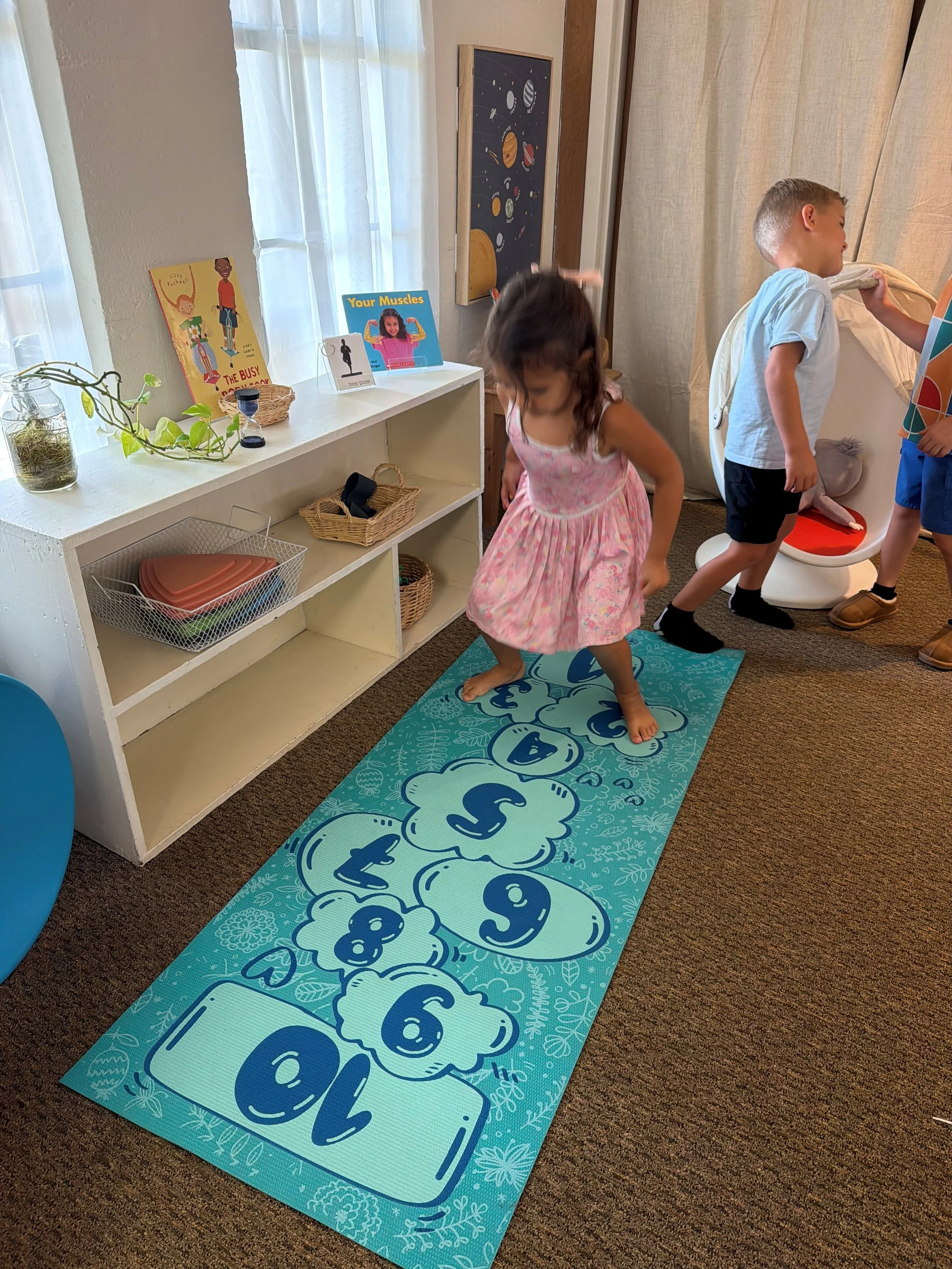
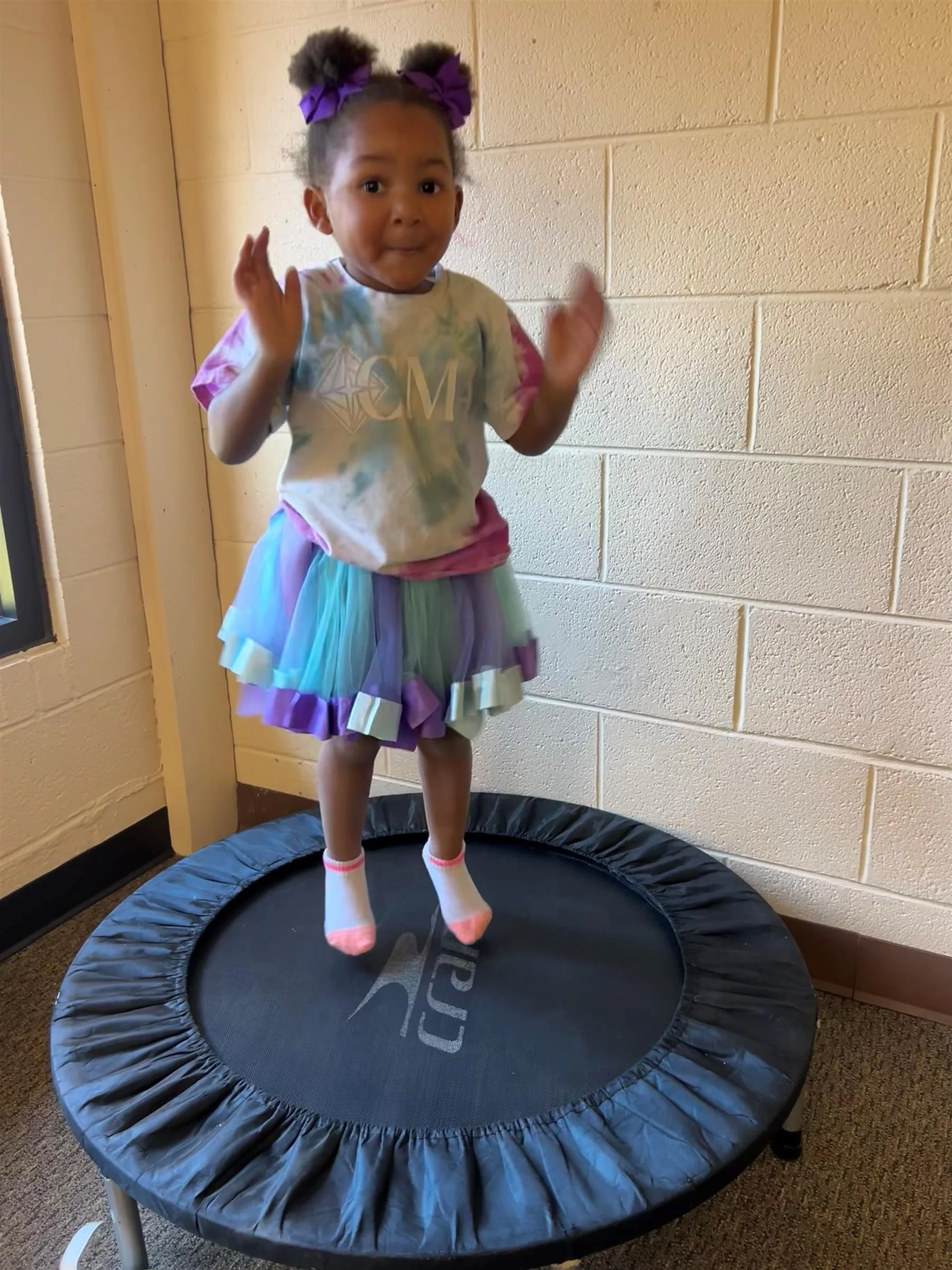
Above, you can see two children utilizing the movement sections of our environments. In Montessori, we don’t expect a child to sit still for hours of instructional time like a traditional classroom. Instead, they have the ability to use the movement area within the classroom boundaries. Fulfilling a need for their bodies in an appropriate way.
What Does This Look Like in Real Life?
Bringing Montessori and Positive Discipline into family life does not require parents to recreate the classroom at home. Small changes in language and expectations can make a significant difference.
Encouraging Cooperation Without Rewards
Your child refuses to clean up their toys.
Instead of:
“If you clean everything up, you can have dessert.”
Try:
“It’s time to put the toys away before dinner. Would you like to start with the blocks or the animals?”
The expectation has not disappeared. Cleanup still needs to happen, but offering a limited choice gives the child appropriate control within the boundary.
If they continue to resist, connection can come before correction:
“That looks like a big job. I’ll help you get started. You put the cars in the basket, and I’ll gather the blocks.”
Over time, the goal is for the child to understand that caring for their belongings and contributing to the household are simply parts of family life, not tasks they perform only when a prize is waiting.
Turning Forgotten Responsibilities into Learning Opportunities
Your older child repeatedly forgets to pack something they need for school. It can be tempting to rescue them every time, or become frustrated and create an unrelated punishment. Instead, allow appropriate natural consequences while helping them develop a system.
You might say:
“It sounds like forgetting your things has been frustrating. What could help you remember tomorrow?”
Maybe they create a checklist, put their backpack by the door, or set everything out the night before.
Rather than solving the problem for the child, we help them develop the executive functioning skills to solve it themselves.
Encouraging Genuine Apologies and Repair
Two siblings argue, and one hurts the other's feelings. Rather than immediately demanding, “Say you're sorry!”, help the child recognize the impact of their actions.
Try:
“Look at your sister's face. How do you think she is feeling right now?”
Then move toward repair:
“What could you do to help make this right?” You can alternately encourage them to ask their sibling how they can make this right, or what they can do to make them feel better.
The child might apologize, offer a hug, fix something they broke, give the other child space, or think of another meaningful solution. Asking how they can fix this, starts to build the understanding that everyone has different needs or opinions on what an appropriate solution may be. One child may want a hug while another may want to voice why they didn’t like something and need to feel heard.
The goal isn't simply getting the words “I'm sorry.” The deeper lesson is empathy, responsibility, and reconciliation.
Encouraging Effort Over Praise
Encouragement is also different from constant praise. When a child shows you a drawing, it can become automatic to respond, “Good job! I love it!” There is certainly nothing wrong with telling your child you love something they created. However, we can also help them develop their own sense of satisfaction.
Try:
“You worked on that for a long time. Tell me about it.”
Or:
“I noticed how many details you added.”
And sometimes simply:
“How do you feel about what you made?”
This shifts the focus from “Does Mom or Dad approve?” toward “Am I proud of my effort and growth?”
Natural Consequences vs. Punishments in Disguise
Natural and logical consequences should never simply be punishments with a new name.
A helpful question is: Is the consequence related, respectful, reasonable, and helpful?
If a child spills something, they help clean it up.
If they misuse a material, the material may need to be put away until they are ready to use it appropriately.
If they hurt someone, they participate in repairing the relationship.
If they spend all of their allotted time getting ready arguing about which shoes to wear, there may no longer be time for the extra activity they hoped to do before leaving.
These experiences teach cause and effect without adding shame, fear, or an unrelated penalty.

When an Elementary student accidentally threw away her weekly work record, she had two choices: recreate it using her completed work or search the trash to find it. She chose the trash and found it! A memorable, real-life lesson in responsibility, problem-solving, and natural consequences.
“But My Child Doesn't Respond to This!”
For families accustomed to rewards, punishments, repeated warnings, or adult negotiation, changing approaches can take time.
A child may initially push harder against a boundary. They may ask, “What do I get if I do it?” They may be surprised when a parent calmly follows through rather than arguing. That doesn't mean the approach isn't working. Children need consistency to understand that kindness does not mean the boundary is optional.
For example:
“I hear that you don't want to leave the park. It's hard to stop when you're having fun. It is still time to go. Would you like to walk to the car or hold my hand?”
You can acknowledge disappointment without changing the limit.
If the child refuses both choices, the adult may need to calmly help them leave. Positive Discipline does not require endless negotiation. Sometimes adults simply have to hold the boundary.
The important difference is that we can be firm without being unkind.
When a child continues to push against a boundary, consider what their behavior may be communicating. Are they seeking connection, wanting more independence, feeling hurt, or struggling with confidence? Understanding the possible mistaken goal can help us respond to the need while still holding the boundary.
Bridging the Gap Between School and Home
Children benefit tremendously when the adults in their lives communicate similar expectations.
That does not mean home needs to look exactly like school. It does mean families can borrow several principles from the Montessori environment:
Give meaningful choices. Instead of asking a question when something isn't actually optional like, “Do you want to get dressed?”, instead offer choices within the expectation: “Would you like the blue shirt or the green shirt?”
Say what the child can do. Instead of repeatedly saying, “Don't run!”, try, “Walking feet inside.” Rather than, “Stop yelling!”, try, “We use quieter voices inside.”
Allow children to contribute. Children often rise to meaningful responsibility. Let them pack part of their lunch, feed a pet, fold towels, set the table, organize their school belongings, or help prepare a meal.
Avoid rescuing too quickly. Struggle is not always a bad thing. When it is safe and appropriate, give children time to work through frustration, make mistakes, and try again.
Focus on solutions. When something goes wrong, move away from “Who is to blame?” and toward “What needs to happen now?”
Connect before correcting. A child who feels heard is often much more prepared to hear guidance. Acknowledging “You are really disappointed” doesn't mean changing your answer.
Follow through calmly. A boundary that changes after enough arguing teaches a child to keep arguing. Consistency allows children to trust both the adult and the limit.
The Goal Is Bigger Than Today's Behavior
Raising and educating children is long-term work.
Sometimes a sticker chart, bribe, threat, or punishment would produce faster compliance in the moment. However, Montessori education asks us to consider the person the child is becoming.
We want children who do the right thing even when nobody is offering them a prize. We want them to recognize when their actions affect someone else and know how to repair the relationship. We want them to persevere through difficult work because they have experienced the satisfaction of overcoming challenges. We want them to understand boundaries, respect others, take responsibility for mistakes, and gradually become capable of regulating themselves.
At CMA, our Montessori philosophy and use of Positive Discipline allow us to approach discipline as teaching rather than controlling.
Children will still make mistakes. They will test boundaries. They will have strong emotions, make impulsive choices, and sometimes need adults to step in firmly.
Those moments aren't interruptions to their education; They are part of it. Each conflict, forgotten responsibility, spilled drink, difficult transition, and disagreement is another opportunity to teach a child: You are capable. Your choices matter. Other people matter. Mistakes can be repaired. And I am here to help you learn how.