
Montessori and Faith: Nurturing the Spirit of the Child
In a world that often prioritizes speed, achievement, and external success, both Montessori education and a faith-centered upbringing invite us to pause and consider something deeper: the spirit of the child. Beyond academics and behavior, there is an inner life within each child—a place of wonder, meaning, morality, and connection. When Montessori principles and faith intersect, they create a powerful foundation for nurturing not only capable learners, but compassionate, purposeful individuals.
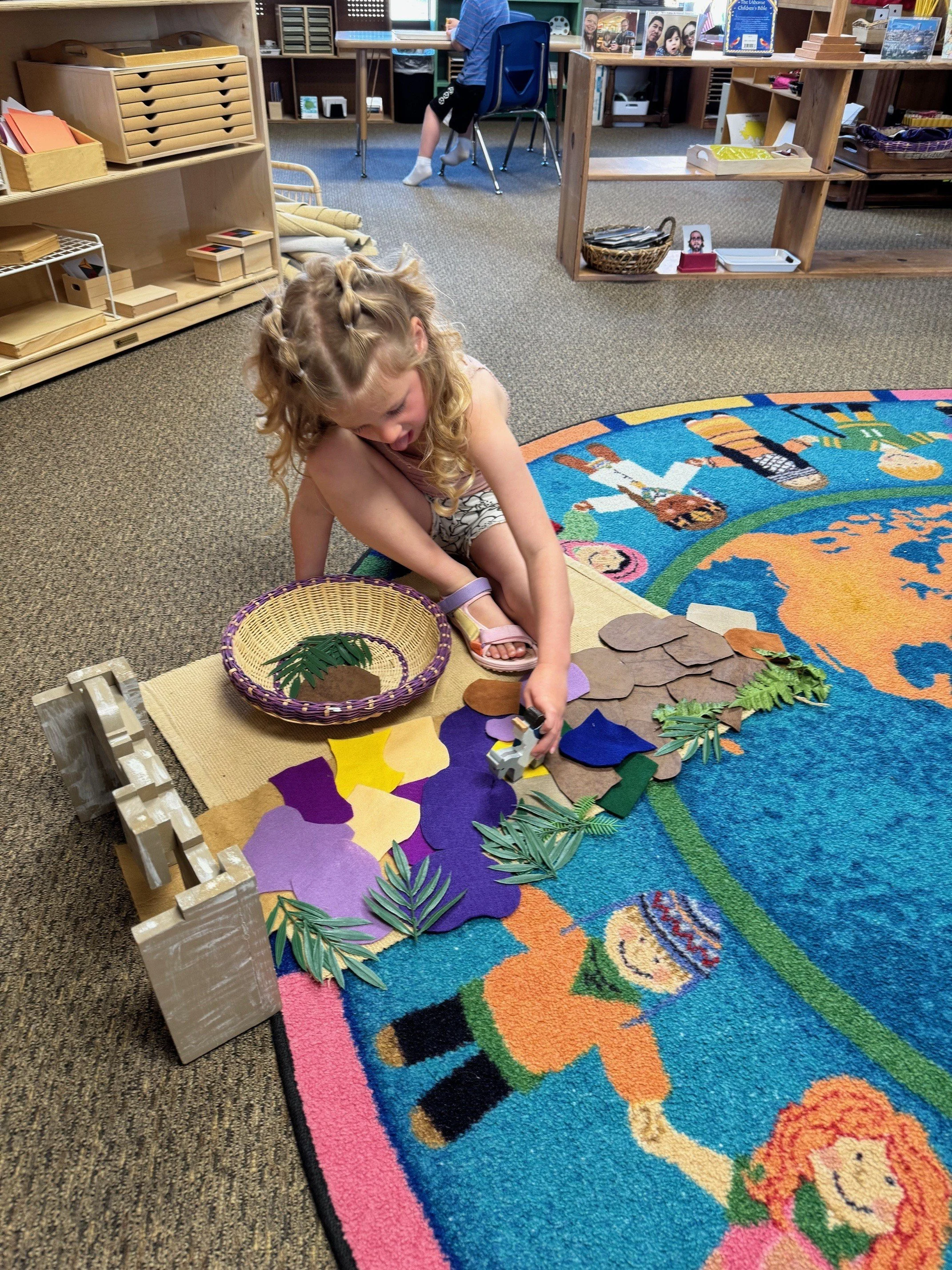
After observing the story of Jesus entering Jerusalem presented with hands-on materials, the child independently chose to retell it. This self-directed repetition deepens her understanding, allowing the meaning of the story to take root while fostering the quiet reflection that leads to lasting, internalized knowledge.
The Spiritual Nature of the Child
Maria Montessori spoke often about the child’s “spiritual embryo,” or the idea that just as a child’s body develops naturally, so too does their inner life. Children are born with an innate sense of awe, a desire for connection, and a natural inclination toward goodness. They are deeply observant, sensitive to beauty, and drawn to truth.
Faith affirms this perspective. Scripture reminds us that children are created with purpose, known and loved by God. When we recognize the sacredness of each child, our role shifts. We are not simply teaching or correcting; we are guiding, protecting, and nurturing something holy.
Creating Space for Stillness and Reflection
Montessori classrooms are intentionally calm, orderly, and peaceful. This environment is not just for concentration; it also fosters reflection. Children are given the gift of time: time to think, to observe, to wonder.
In a faith-based setting, this aligns beautifully with spiritual practices. Moments of quiet prayer, reflection, or gratitude can become a natural extension of the Montessori environment. Children learn that stillness is not empty—it is where we listen, grow, and connect with God.
Simple practices can make a profound impact:
A moment of silence before beginning work
Quiet reflection after a lesson
Gratitude shared at the end of the day
These rhythms help children recognize that their inner life matters.
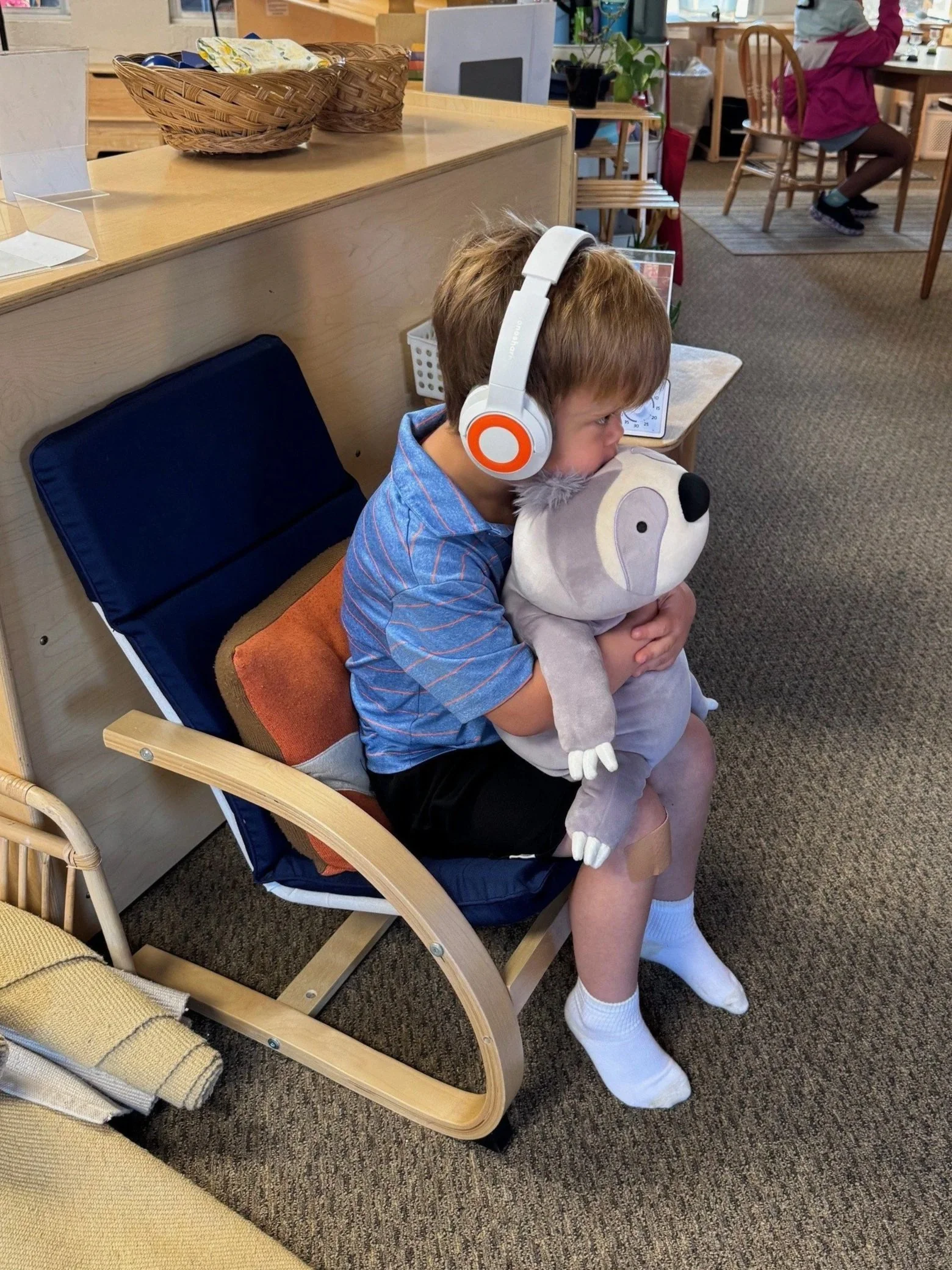
A Children’s House student pauses between work to enjoy a quiet moment, listening to a song or story. Choosing to hold Mr. Slothy, their weighted sloth companion, adds an extra layer of comfort, supporting a sense of calm and encouraging peaceful reflection.
Freedom Within Limits: A Moral Foundation
One of the cornerstones of Montessori education is “freedom within limits.” Children are given the freedom to choose their work, move about the classroom, and follow their interests, but always within clear, respectful boundaries.
This mirrors a faith-based understanding of freedom. True freedom is not the absence of limits, but the ability to choose what is good, right, and life-giving. Through daily experiences, children begin to internalize values such as kindness, responsibility, honesty, and self-control.
Rather than being told what is right, they experience it:
Choosing to help a friend
Caring for shared materials
Taking responsibility for their actions
These small, consistent choices build a moral compass rooted in both independence and integrity.
Cultivating Wonder and Awe
Children are naturally drawn to the beauty and complexity of the world. Montessori education nurtures this through hands-on exploration, nature study, and big-picture lessons that inspire curiosity about the universe.
Faith deepens this wonder by pointing to a Creator behind it all.
When a child studies the intricacy of a leaf, the vastness of space, or the interconnectedness of life, they are not just learning science—they are encountering something greater than themselves. This sense of awe lays the foundation for reverence, gratitude, and humility.
Encouraging wonder might look like:
Spending time outdoors observing nature
Asking open-ended questions about the world
Connecting lessons to a bigger purpose or meaning
When children are allowed to marvel, they begin to see the world as a gift.
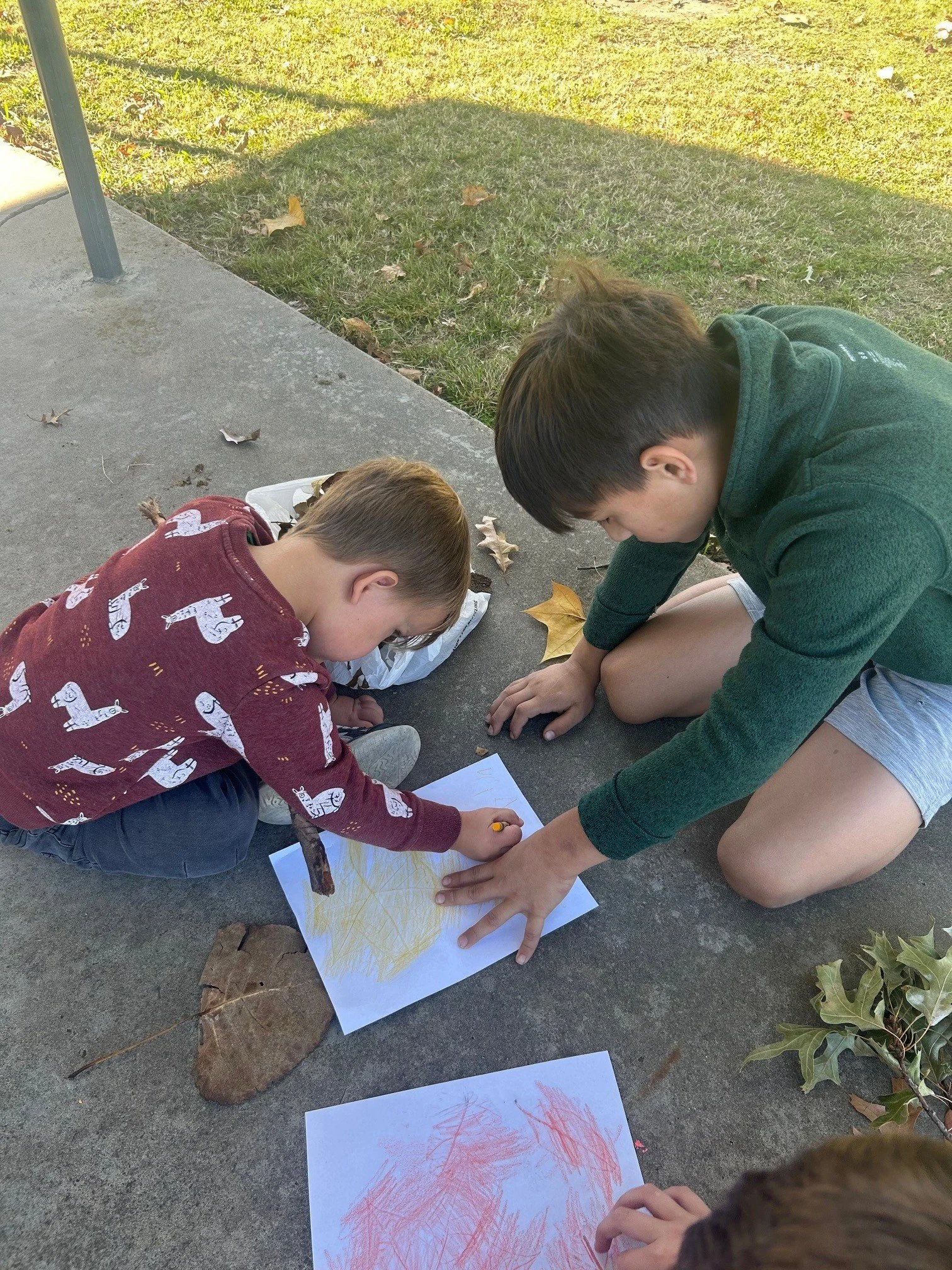
The Children’s House and Upper Elementary buddies enjoyed a shared nature walk, making thoughtful observations and collecting items that sparked their curiosity along the way. They concluded their time at the park, where they explored each find up close, examined details, created leaf rubbings, and compared the unique characteristics of each piece.
The Role of the Adult: Guide, Not Director
In both Montessori education and faith formation, the adult plays a similar role: a guide rather than a director.
Instead of controlling every outcome, we:
Prepare the environment
Model behavior and values
Offer gentle guidance when needed
Trust the child’s developmental process
Spiritually, this requires humility. We recognize that we are not shaping the child alone, but that God is constantly at work in their life. Our role is to be faithful, patient, and attentive.
Children learn as much from who we are as from what we say. When they see adults living with kindness, grace, and faith, those qualities become tangible and real.
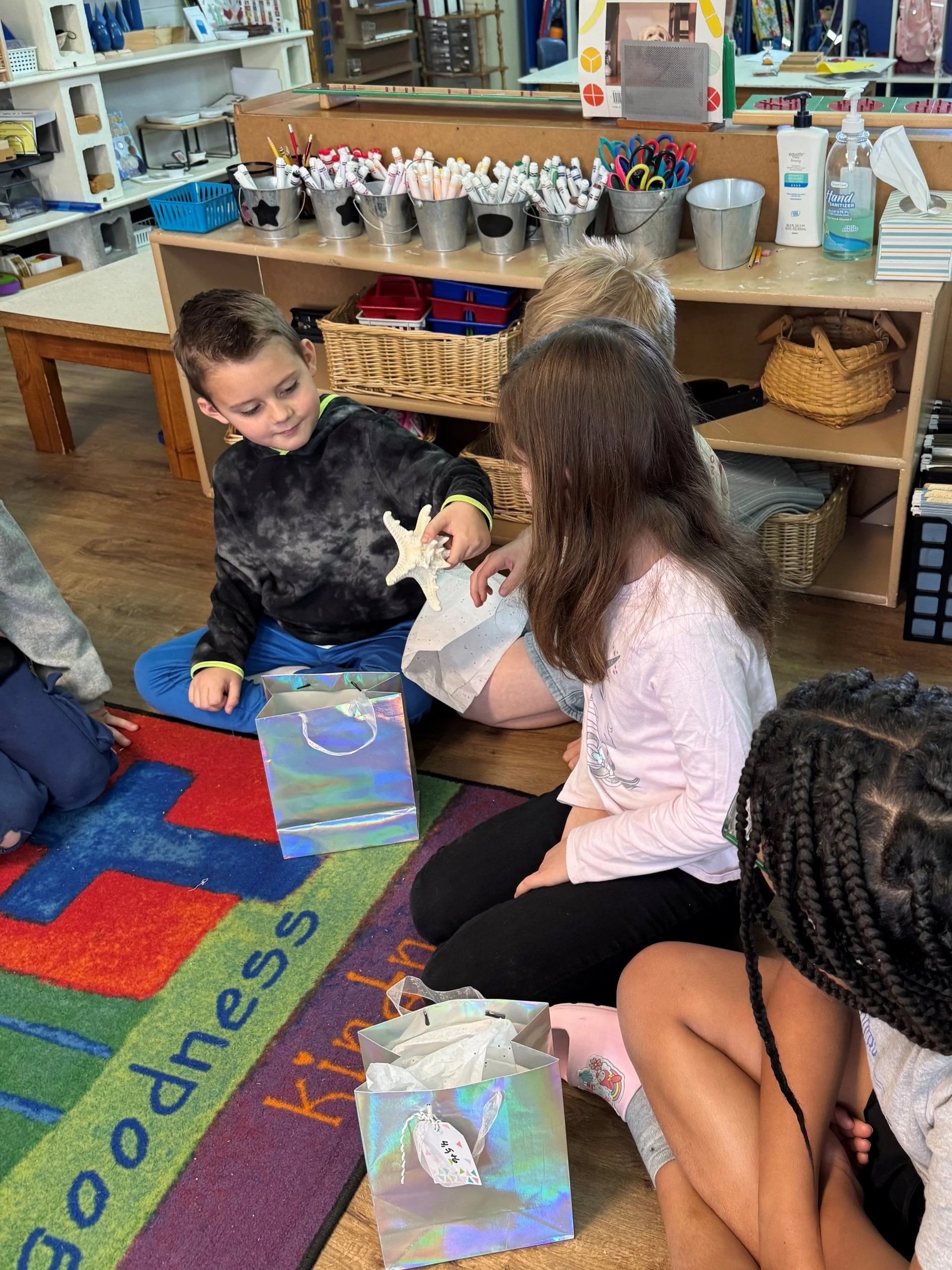
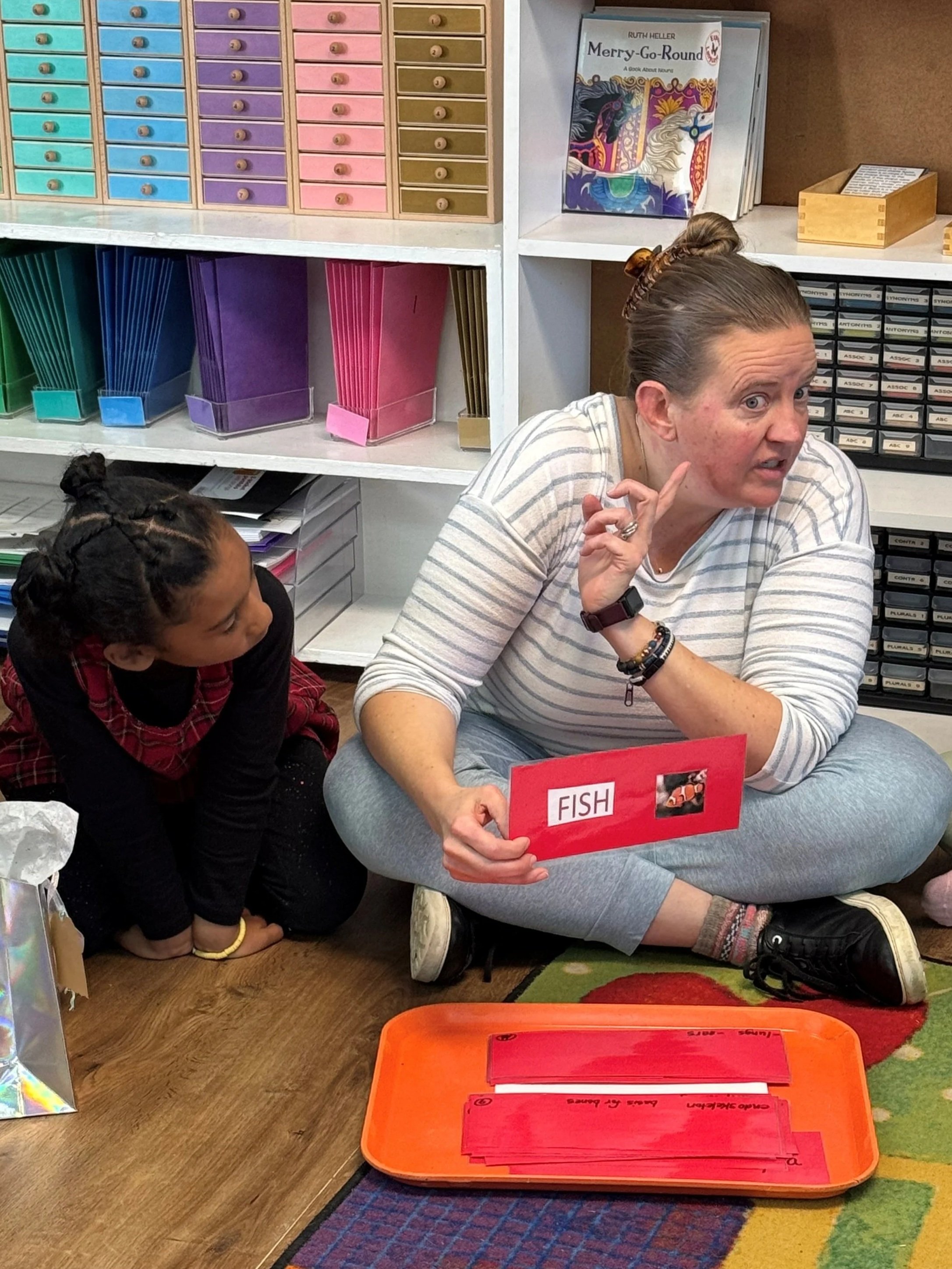
In the photos above, a Guide is presenting a group lesson to introduce a new unit of study. Students are beginning an exploration of the many phyla within the animal kingdom, learning to observe and identify the unique characteristics of each classification. Lessons like these are designed to spark imagination and curiosity, laying a foundation that invites students to further engage with hands-on materials and deepen their understanding through independent discovery.
Grace, Forgiveness, and Growth
Mistakes are an essential part of learning in Montessori environments. Rather than punishment, children are given opportunities to correct their work, try again, and grow.
Faith reinforces this with the concepts of grace and forgiveness.
Children begin to understand:
Mistakes do not define them
There is always an opportunity to make things right
They are loved unconditionally
This creates a safe space for both academic and spiritual growth. Instead of fear, children are motivated by a desire to improve, to restore relationships, and to do what is right.
Building a Sense of Purpose
Montessori education encourages children to see themselves as capable contributors to their community. From caring for their classroom to helping peers, they begin to understand that their actions matter.
Faith expands this understanding into a greater sense of purpose. Children are not only part of a classroom—they are part of a larger story. They are uniquely created with gifts, called to love others, and capable of making a difference.
When children feel this sense of purpose, their work takes on deeper meaning. They are not just completing tasks; they are developing the skills and character needed to serve others.

Middle School students serve our community each month, putting their values into action through meaningful work. Here, they are sorting clothing donations at Emergency Infant Services, contributing their time and care to support families in need.
Partnering with Families
The connection between Montessori and faith is strongest when it extends beyond the classroom. Families play a vital role in nurturing the spiritual life of the child.
Simple, consistent practices at home can reinforce what children experience at school:
Daily prayer or devotion time
Conversations about gratitude and kindness
Modeling forgiveness and grace in family relationships
Encouraging questions about faith and life
When children see alignment between school and home, their understanding deepens and becomes more authentic.
Nurturing the Whole Child
At its heart, Montessori education is about educating the whole child—mind, body, and spirit. When paired with a faith-centered approach, this vision becomes even more complete.
We are not just preparing children for the next grade level.
We are preparing them for life.
A life marked by:
Curiosity and wonder
Compassion and empathy
Responsibility and integrity
Faith and purpose
By nurturing the spirit of the child, we honor who they are today while guiding them toward who they are becoming.
Montessori and faith are not separate paths—they are deeply complementary. Both call us to slow down, observe, and trust in the natural and spiritual development of the child.
When we create environments that support both learning and faith, we give children something lasting: a strong foundation rooted not only in knowledge, but in truth, love, and purpose.
And in doing so, we nurture something far greater than academic success—we nurture the heart and soul of the child.