
Supporting Concentration and Focus the Montessori Way
At Christian Montessori Academy, we believe that helping children develop strong focus and concentration is one of the greatest gifts we can offer them. In a world filled with constant noise — digital, emotional, and environmental — Montessori education provides a gentle, purposeful alternative. It invites children into meaningful work, peaceful rhythms, and environments designed intentionally for the development of the whole child.
Maria Montessori observed that concentration is not something we impose on the child, but something the child naturally grows into when given freedom, order, and work that meets their developmental needs. When we support a child’s ability to focus, we support their growth in independence, academic understanding, and inner peace.
The Montessori Philosophy Behind Concentration
Dr. Montessori described concentration as the cornerstone of healthy development. When a child becomes deeply absorbed in purposeful work, she called it the “polarization of attention” — a moment in which the child’s mind, body, and spirit are harmoniously engaged. These moments shape who the child is becoming.
Developmental Periods and the Psychology of Attention
Montessori’s theory of Planes of Development gives us a framework for understanding how focus develops over time. She defined these planes as:
Birth to Age 6: The Absorbent Mind
Children in this stage learn effortlessly from their environment. Their concentration grows through:
Hands-on, sensorial exploration
Repetition that strengthens neural pathways
Freedom to choose meaningful work
This is when we see young children completely absorbed in tasks like pouring, sweeping, building, or working with materials.
Psychologically, this stage supports the development of executive functions — the mental skills that allow a child to plan, regulate, organize, and sustain attention.
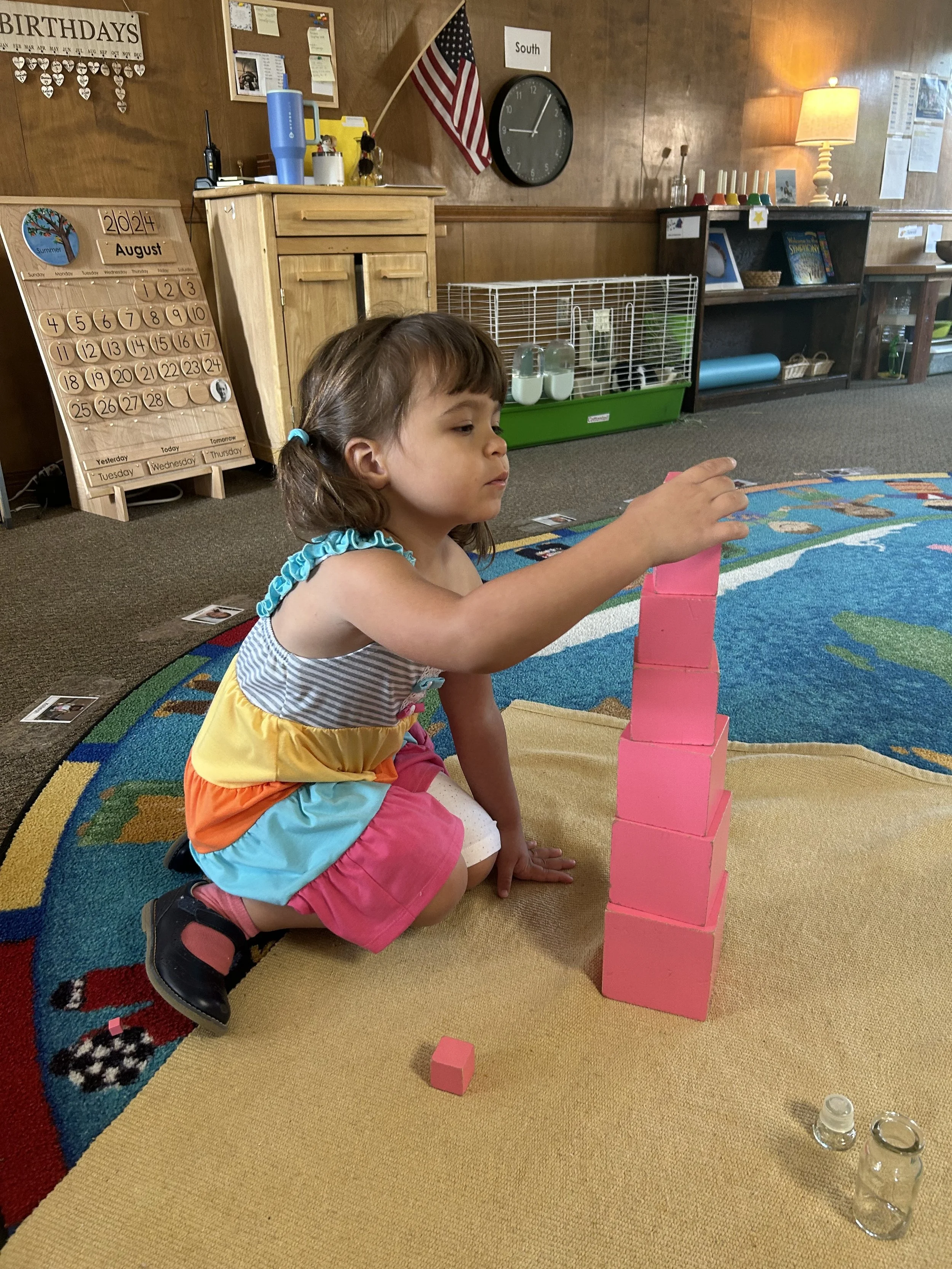
A Children’s House child is working on the Pink Tower with quiet focus, carefully stacking the cubes from largest to smallest. Her hands move deliberately, adjusting each piece until it sits perfectly. Through this purposeful work, she develops visual discrimination, fine motor coordination, and sustained concentration, all while experiencing the satisfaction of mastery.
Ages 6–12: The Reasoning Mind
Elementary children shift toward imagination, big ideas, and social learning. Their concentration deepens through:
Long-term projects
Research connected to real interests
Collaboration within a community
Here, children are capable of intense mental focus when their curiosity is engaged and when they are allowed freedom within clear, consistent expectations.
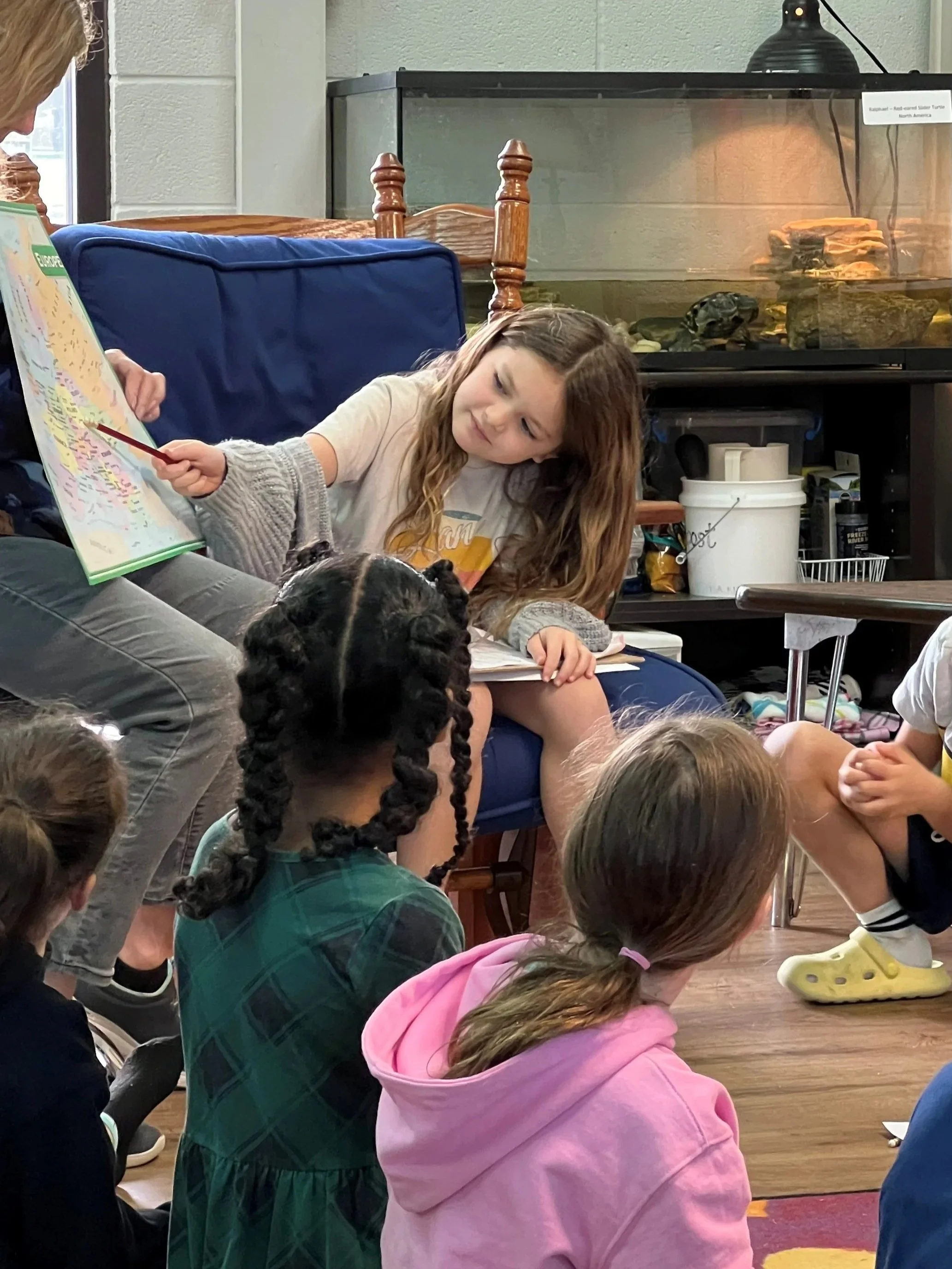
Lower Elementary students are practicing focus, listening, and collaboration as one student presents her report on her chosen European country. As she shares, classmates engage thoughtfully, asking questions and learning from one another — building both knowledge and the skills of respectful, attentive communication.
Ages 12–15: The Developing Social Self
Adolescents are forming identity, purpose, and belonging. Their concentration thrives when tasks feel relevant and meaningful:
Real work
Service to the community
Opportunities to create and lead
Emotion, motivation, and connection all play major psychological roles in attention at this age.
Understanding these developmental periods helps us create environments that meet children where they are, rather than forcing them into work they are not yet developmentally prepared for.
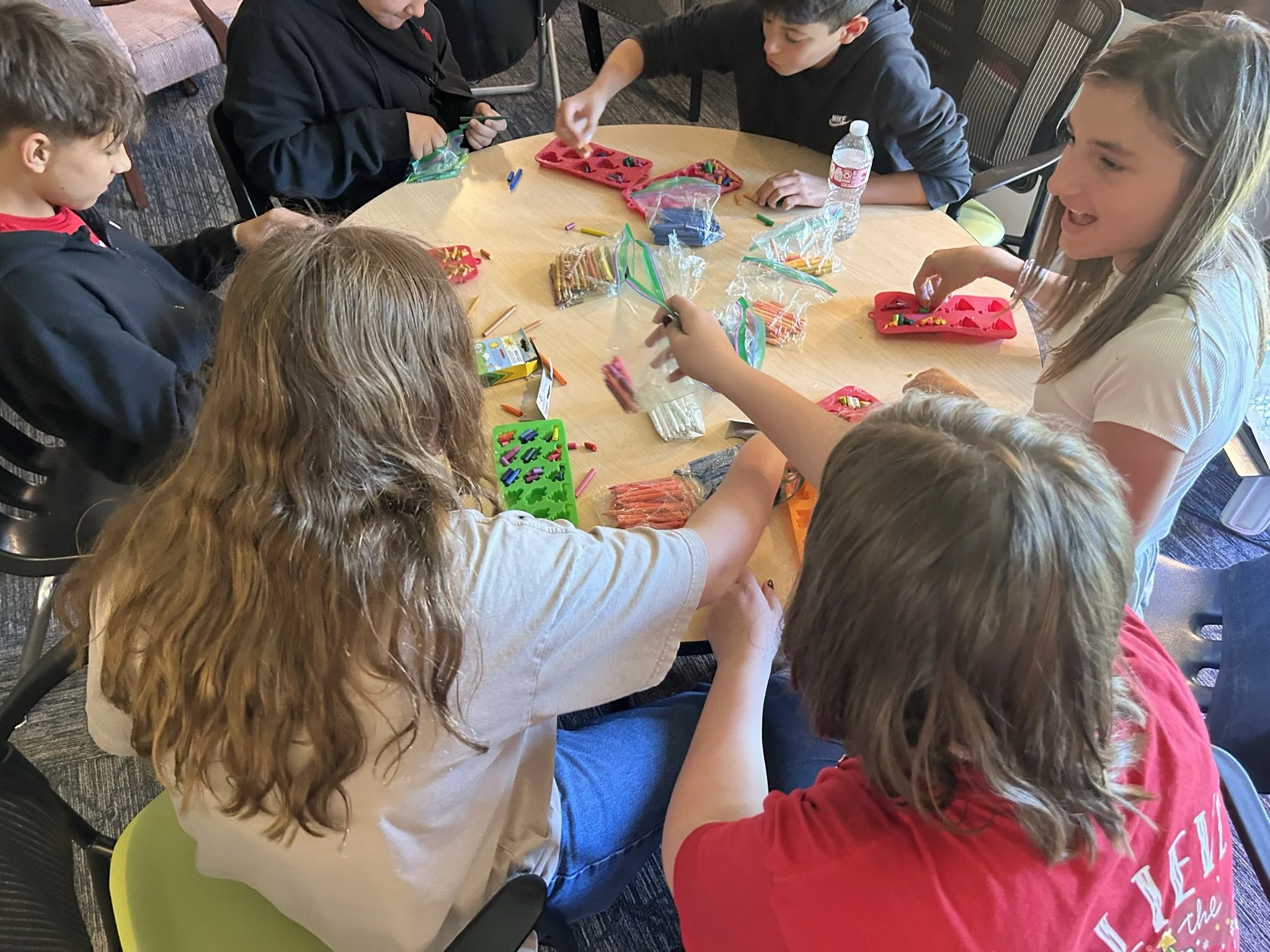
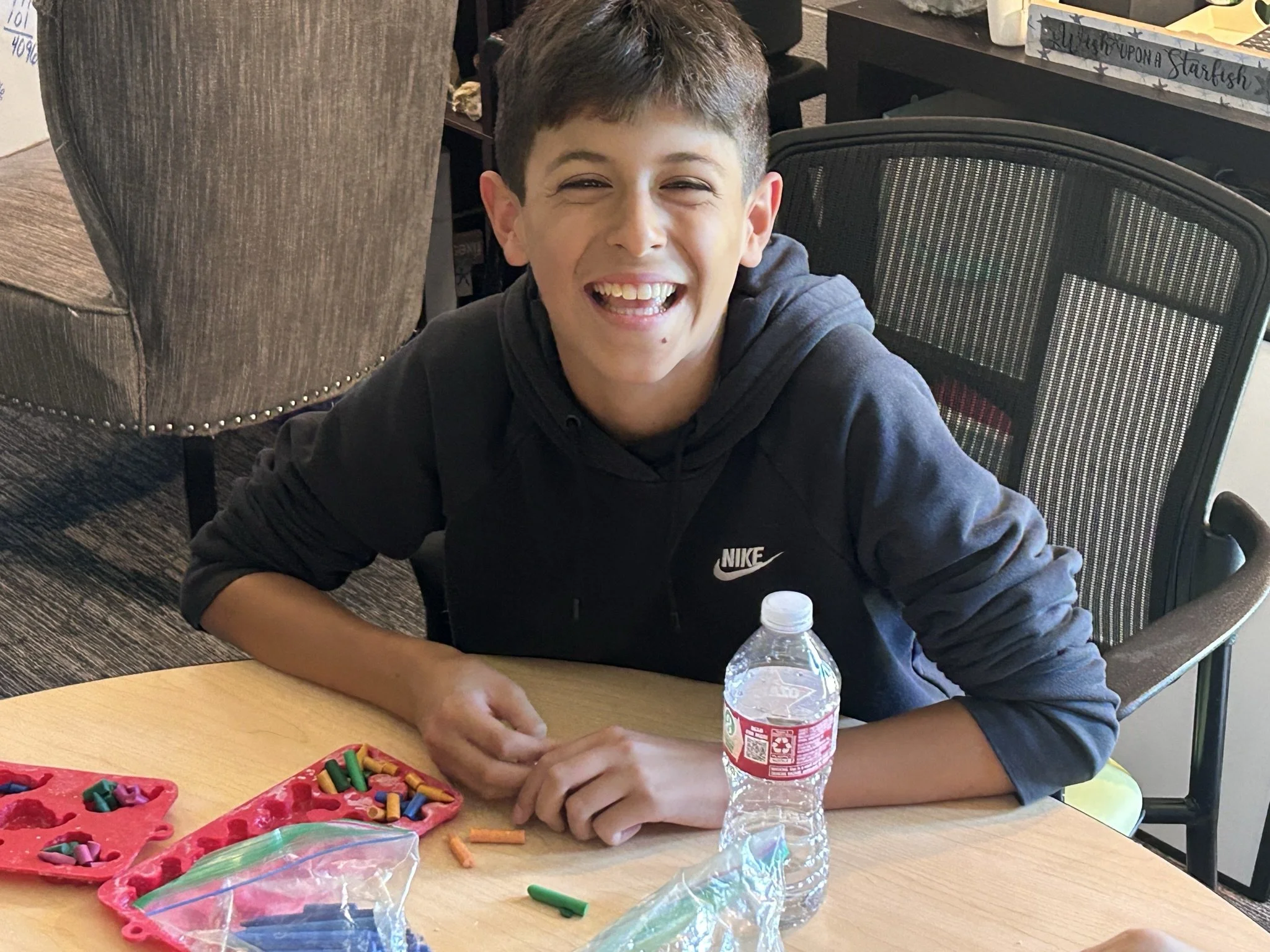
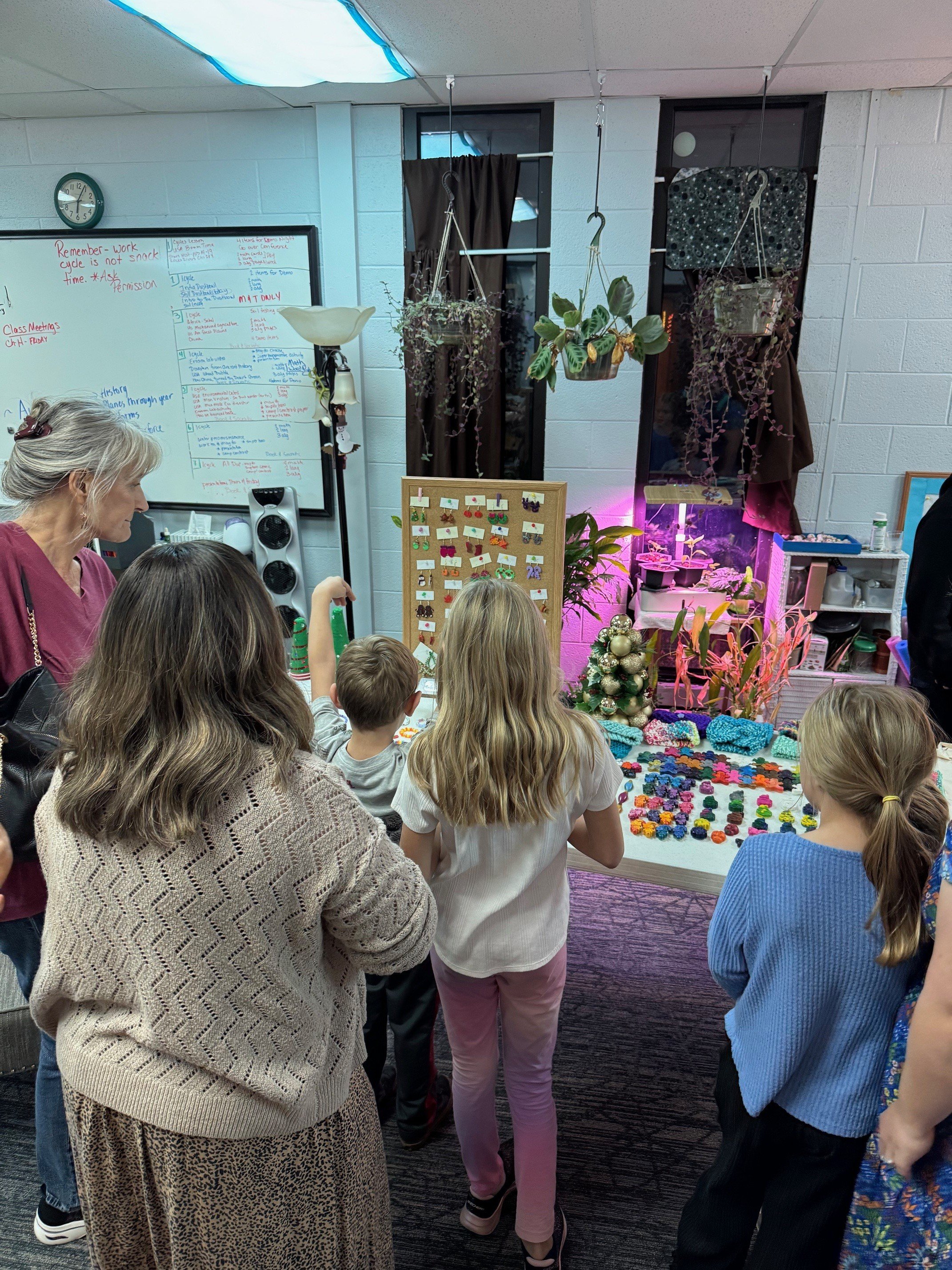
Middle School students collaborate to create items for their school shop, putting teamwork, creativity, and problem-solving into action. Every sale supports their self-planned, budgeted end-of-year trip, giving them hands-on experience in entrepreneurship, responsibility, and real-world decision-making.
Prepared Environment: The Foundation for Concentration
At Christian Montessori Academy, the classroom itself acts as a teacher. A well-prepared environment is more than a backdrop — it is an intentional space designed to meet the developmental needs of each child and nurture the deep, uninterrupted concentration essential for growth. Every detail, from the layout of the shelves to the peaceful atmosphere, supports the child’s natural desire to work with purpose and independence.
Freedom Within Limits
Children are given the freedom to choose their work, but within a thoughtfully structured environment. This balance gives them space to follow their interests while learning responsibility, self-discipline, and respect for the community. When a child chooses work that is meaningful to them, intrinsic motivation ignites — and intrinsic motivation is the most powerful foundation for true concentration.
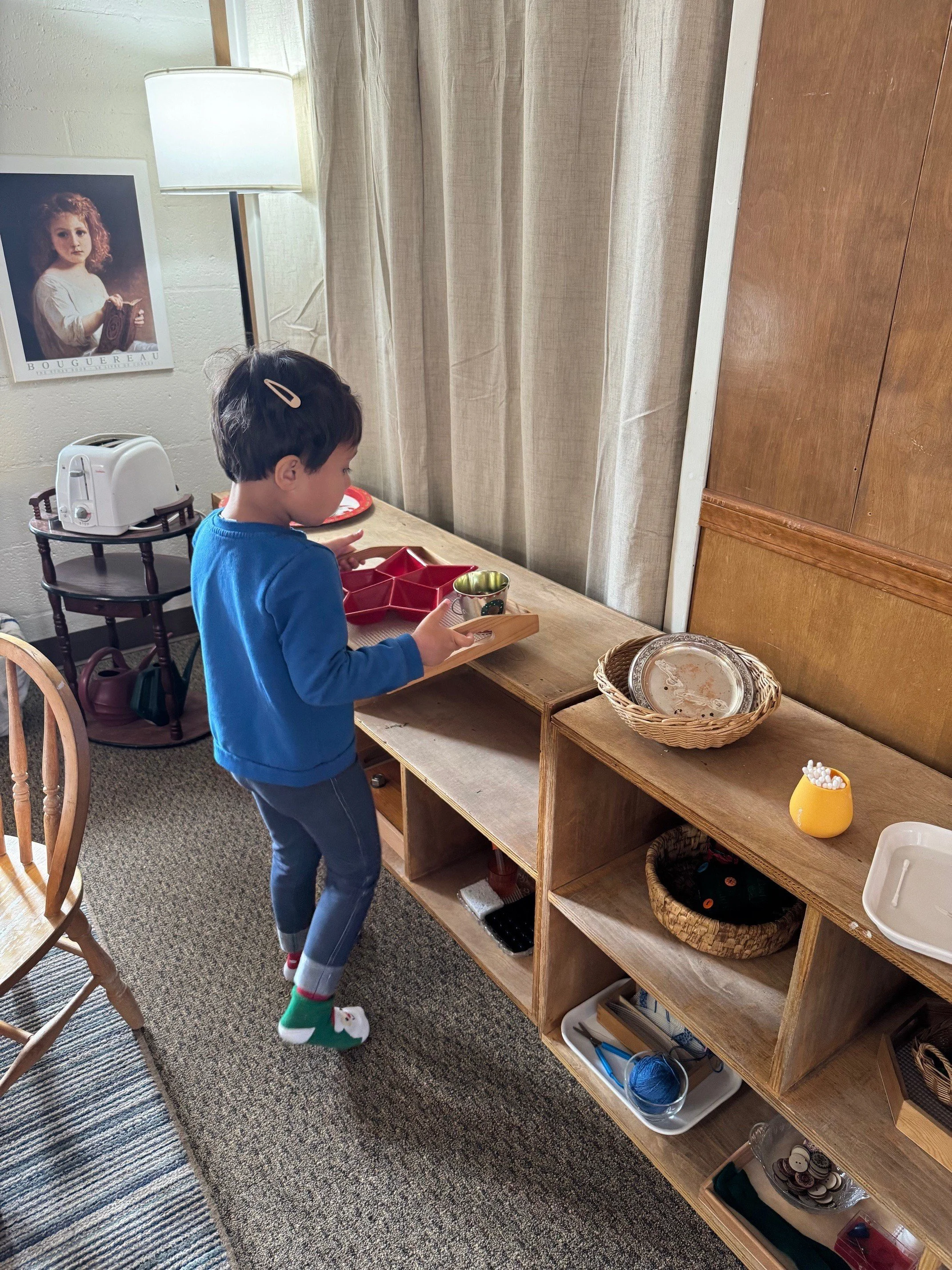
A child independently selects work from the practical life shelf, exercising freedom within limits. By choosing a purposeful task within the thoughtfully prepared environment, they build confidence, coordination, and responsibility while learning to make thoughtful decisions and care for their surroundings.
Hands-On, Self-Correcting Materials
Montessori materials are meticulously designed to be inviting, purposeful, and developmentally precise. Each material isolates a concept, allows for repetition, and includes a built-in control of error so the child can learn independently. This hands-on exploration encourages extended focus, refines movement, builds problem-solving skills, and supports the joyful mastery that keeps children engaged.
Peaceful, Ordered Spaces
Order is a gift to the child. At CMA, we prepare calm, beautiful classrooms where everything has a purpose and a place. Soft colors, natural materials, gentle lighting, and intentional organization help children regulate their nervous systems and settle into productive work. When the external environment is orderly, it supports the growth of internal order — an essential element of concentration.
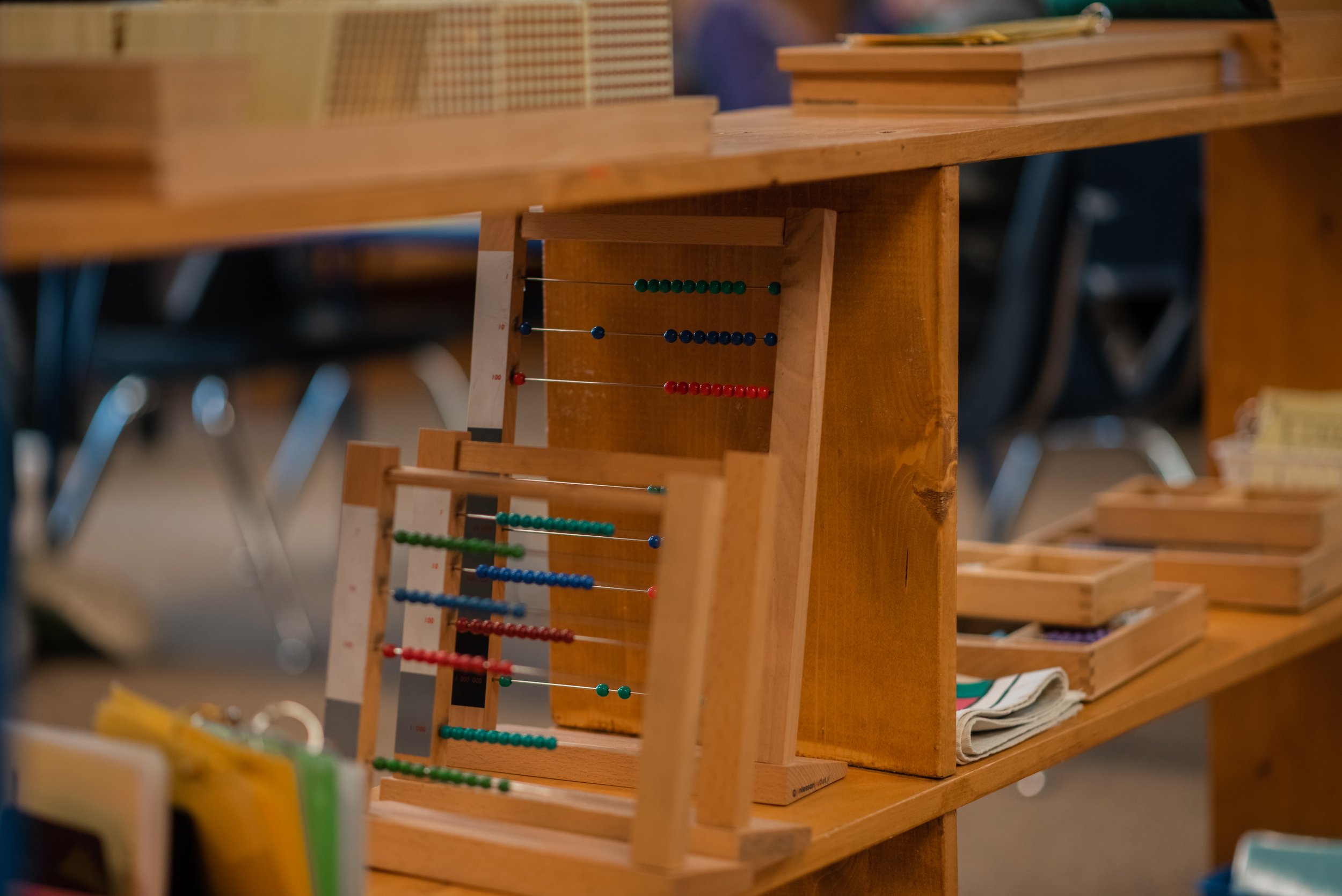
Montessori materials are intentionally and beautifully arranged to invite exploration, promote engagement, and support self-regulation. Every item has a purpose and a place, creating a calm, orderly environment where children can focus, learn independently, and take pride in their work.
Respect for Deep Work
Montessori guides observe with patience and care, stepping in only when a child genuinely needs support. This protection of concentration is central to the Montessori philosophy. When a child is deeply engaged, we honor that moment as something sacred — a sign of development unfolding before our eyes. By modeling respect for focused work, we teach children to value it within themselves and others.
How Families Can Support Focus and Concentration at Home
Concentration doesn’t only develop in the classroom. While the prepared environment at CMA gives children daily opportunities for deep, meaningful work, the habits of focus and inner order grow strongest when they are supported consistently in both school and home environments. Montessori education has always emphasized that the child’s development is a shared journey. When families and educators work together, children experience harmony between their two most important learning spaces — and that consistency becomes a powerful foundation for attention, independence, and peace.
At school, children are given structure, purposeful materials, and a calm, orderly environment. When similar principles are reflected at home, the child experiences a sense of predictability and security. Their developing brain learns that focus is valued in every part of their life, not just the classroom. This alignment allows children to practice concentration across settings, strengthening the neural pathways and habits that lead to sustained attention and self-discipline.
Families play an essential role in nurturing steady, peaceful attention. The home environment does not need to replicate a Montessori classroom to support these skills — simple, thoughtful choices can make a meaningful difference. Here are ways to bring Montessori principles into daily home life and reinforce the beautiful work happening at school:
1. Simplify and Organize the Environment
Children focus more easily when their space is predictable and uncluttered. Try:
Low shelves with a few intentional activities
A quiet reading nook
Rotating toys rather than leaving out everything at once
2. Protect Their Deep Work
If your child is absorbed in building, coloring, reading, or sorting — let them continue. Protecting these moments, even when they appear small, communicates a powerful message: I trust you, and your work matters. When adults pause and allow uninterrupted focus, children strengthen their internal discipline, build confidence in their abilities, and experience the satisfaction that comes from completing meaningful work at their own pace. Over time, these protected moments become the building blocks of sustained concentration and a peaceful sense of purpose.
3. Offer Real, Purposeful Tasks
Children love meaningful contribution:
Preparing snacks
Watering plants
Folding towels
Helping with dinner or setting the table
These practical life activities strengthen coordination, independence, and sustained attention. As children repeat real, purposeful tasks, they refine their movements, learn to take responsibility for their environment, and build the ability to stay focused from start to finish. What appears simple like pouring water, folding towels, or preparing a snack is actually laying the groundwork for self-discipline and confident, capable work in every stage of development.
4. Build a Rhythm of Quiet
Create pockets of calm in your family’s day:
Reading time
Art journaling
Simple puzzles
Outdoor time without hurry
A peaceful rhythm nurtures a peaceful mind. When children move through predictable routines and calm transitions, their nervous systems settle, making it easier for them to engage deeply in work and play. Consistent rhythms, whether in morning routines, mealtimes, or quiet moments, provide a sense of security that helps children regulate their emotions, focus their attention, and approach their day with confidence and calm.
5. Limit Overstimulation
Too much noise, entertainment, or clutter can overwhelm a child’s developing attention systems, making it harder for them to settle, process information, and engage in purposeful work. Children’s brains are still learning how to filter distractions, organize sensory input, and regulate their focus. By creating intentional calm — a quiet, orderly space with limited distractions — we give children the room they need to direct their attention, think deeply, and fully engage with the task at hand. This gentle structure supports not only concentration but also emotional regulation and a sense of inner peace, laying the foundation for lifelong learning habits.
6. Model What Focus Looks Like
Children imitate what they see. When adults approach their own work with care, focus, and intention — whether it’s completing a task thoughtfully, reading quietly, or engaging in prayer or reflection — children internalize these habits and begin to model them in their own lives. Observing adults who value patience, concentration, and purpose teaches children that focused work and calm presence are important and meaningful. Over time, these everyday examples help children develop self-discipline, respect for their own work, and a natural inclination toward sustained attention.
A Christian Montessori Perspective
At Christian Montessori Academy, we view concentration as part of the child’s spiritual development. When a child works with purpose and peace, they reflect the quiet presence of God within them. Dr. Montessori wrote that the child’s work is the pathway to self-construction; as Christians, we also believe it is one way children come to know the gifts God has placed inside them.
By nurturing focus and attention, we are helping children grow in perseverance, stewardship, and joy — qualities rooted deeply in both Montessori philosophy and our mission to educate the whole child.