
The Power of the Uninterrupted Work Cycle
One of the most defining features of a Montessori classroom, and one of the most essential to a child’s development, is the uninterrupted work cycle. While it may look different from traditional classroom schedules, this extended period of focused work is intentionally designed to support how children naturally learn, grow, and thrive.
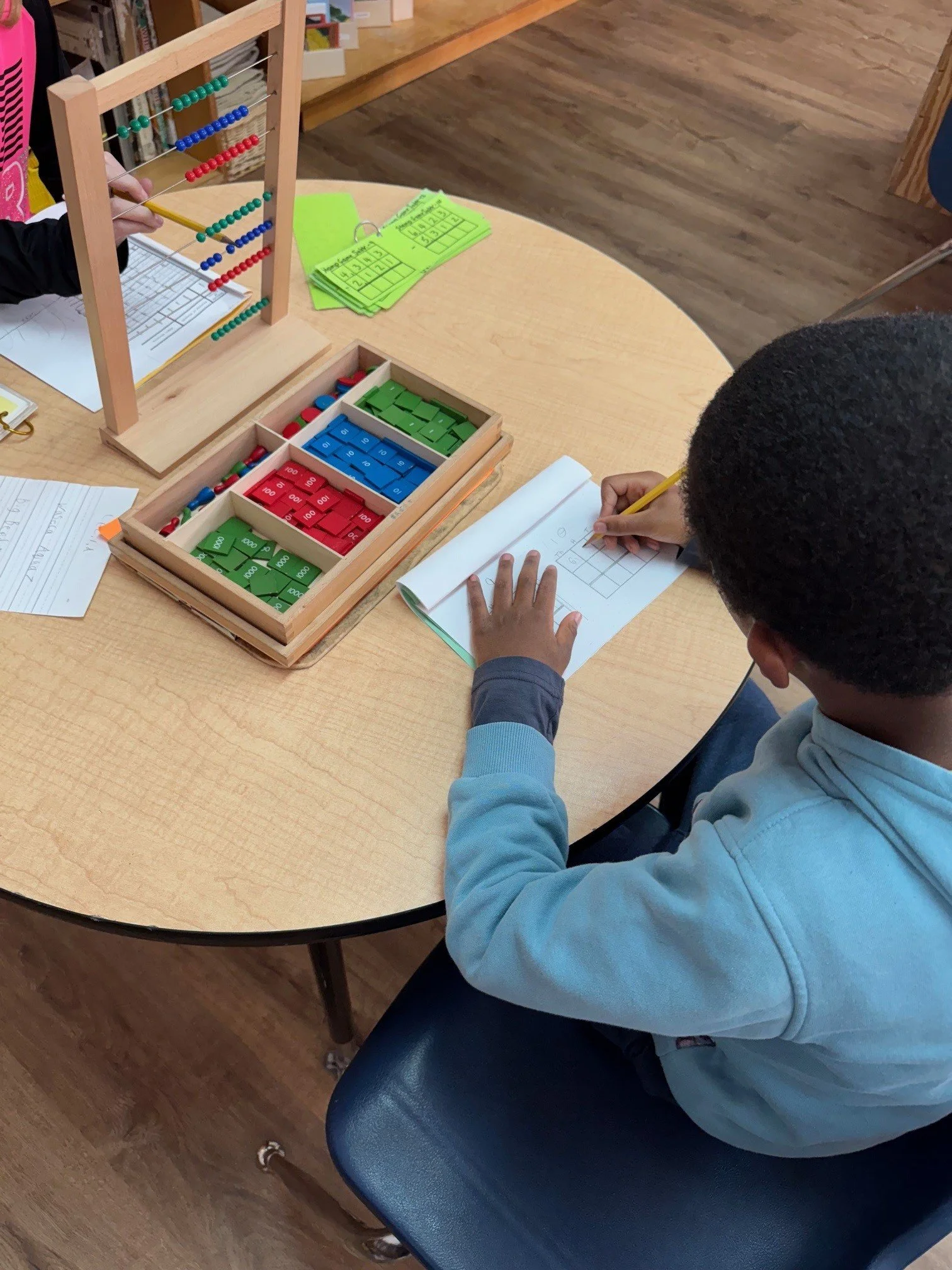
A Lower Elementary student is independently working on a math lesson.
What Is the Uninterrupted Work Cycle?
The uninterrupted work cycle is a sacred span of three hours, during which children are free to choose their work, engage deeply, and follow tasks from beginning to end without unnecessary interruptions. Rather than moving through short, teacher-directed lessons or rotating activities on a rigid schedule, students are given the space to work at their own pace.
This structure allows children to explore materials, repeat activities, problem-solve, and refine skills in a meaningful way. It supports sustained concentration and honors each child’s individual readiness and interests.
Why Uninterrupted Time Matters
Dr. Maria Montessori observed that true learning happens when children are deeply engaged. Concentration is not something we demand from children. It is something that develops when the environment and schedule support it.
During an uninterrupted work cycle, children learn far more than academic concepts. They develop:
Focus and attention
Independence and self-direction
Time management skills
Perseverance and resilience
Confidence in their own abilities
When children are allowed to choose their work and stay with it as long as needed, learning becomes purposeful rather than rushed. This leads to deeper understanding and a genuine love of learning.
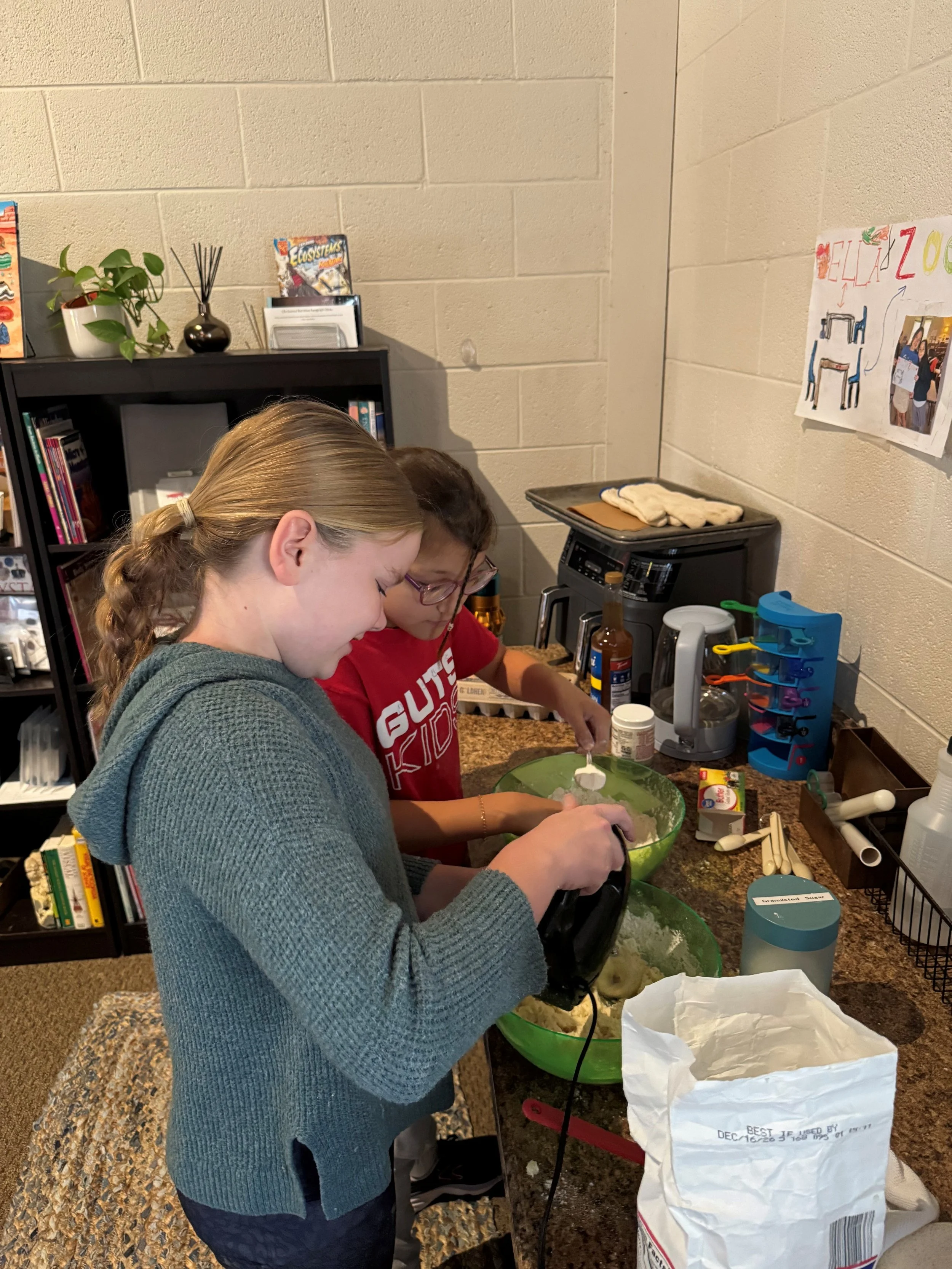
Two Upper Elementary students working collaboratively on a recipe from the cooking area. These activities foster skills in teamwork, following instructions, focusing on a task, and practical life skills in the kitchen.
Understanding the Cycle of False Fatigue
A key concept connected to the uninterrupted work cycle is false fatigue—a phenomenon Dr. Montessori identified through careful observation.
False fatigue often appears shortly after children begin working. A child may seem restless, distracted, or disinterested. In traditional settings, this behavior is sometimes interpreted as a need for a break, a change of activity, or external stimulation. However, Montessori discovered that this stage is actually a natural transition on the path to deep concentration.
If the work cycle is interrupted during this phase, children may never move beyond surface-level engagement. But when given time and freedom to continue, children often pass through false fatigue and emerge into a state of focused, meaningful work. This is when true learning occurs.
By protecting long, uninterrupted periods, Montessori classrooms allow children to move through this cycle naturally without pressure, rushing, or unnecessary redirection.
Respecting the Child’s Concentration
One of the core principles of Montessori education is respect for the child, and that includes respect for their concentration. Interruptions, even well-intentioned ones, can disrupt a child’s internal rhythm and learning process.
The uninterrupted work cycle teaches children to listen to themselves, recognize when they are ready for a challenge, and experience the satisfaction of completing meaningful work. Over time, this builds self-discipline not through external control, but through internal motivation.
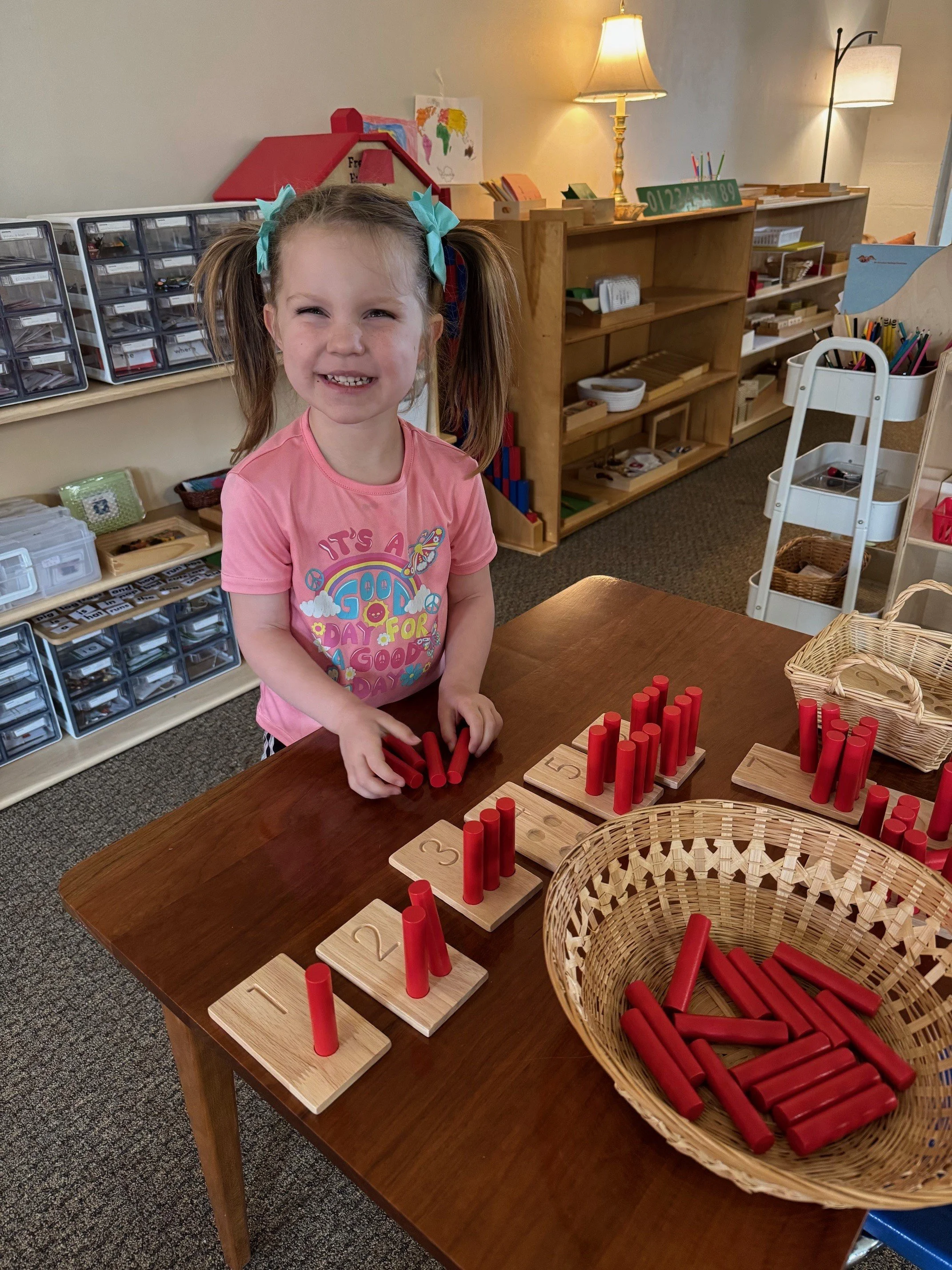
As a Children’s House student cleans up her work, you can see the sense of joy and accomplishment she feels for completing her work independently and without interruption.
More Than a Schedule—A Philosophy
The uninterrupted work cycle is not simply a block of time on the schedule; it is a reflection of Montessori philosophy as a whole. It prioritizes depth over speed, process over product, and intrinsic motivation over external rewards.
By honoring this time, we are supporting the whole child—academically, socially, and emotionally. We are giving children the opportunity to become confident, capable learners who trust themselves and take joy in their work.
In Montessori classrooms, learning is not rushed and concentration is protected. That is where the magic happens.
Bringing the Uninterrupted Work Cycle Home
Families can mirror the Montessori philosophy of the uninterrupted work cycle at home by intentionally protecting periods of focused time for their children. This might look like allowing your child to play, build, read, draw, or work on a project without frequent interruptions, questions, or transitions. Limiting background noise, reducing screen use during play, and resisting the urge to step in too quickly all help children move through false fatigue and into deeper concentration. When children are given the time and trust to stay with their work, they develop persistence, independence, and confidence—just as they do in the classroom. Even short, uninterrupted periods at home reinforce the powerful message that a child’s focus and effort are worth protecting.